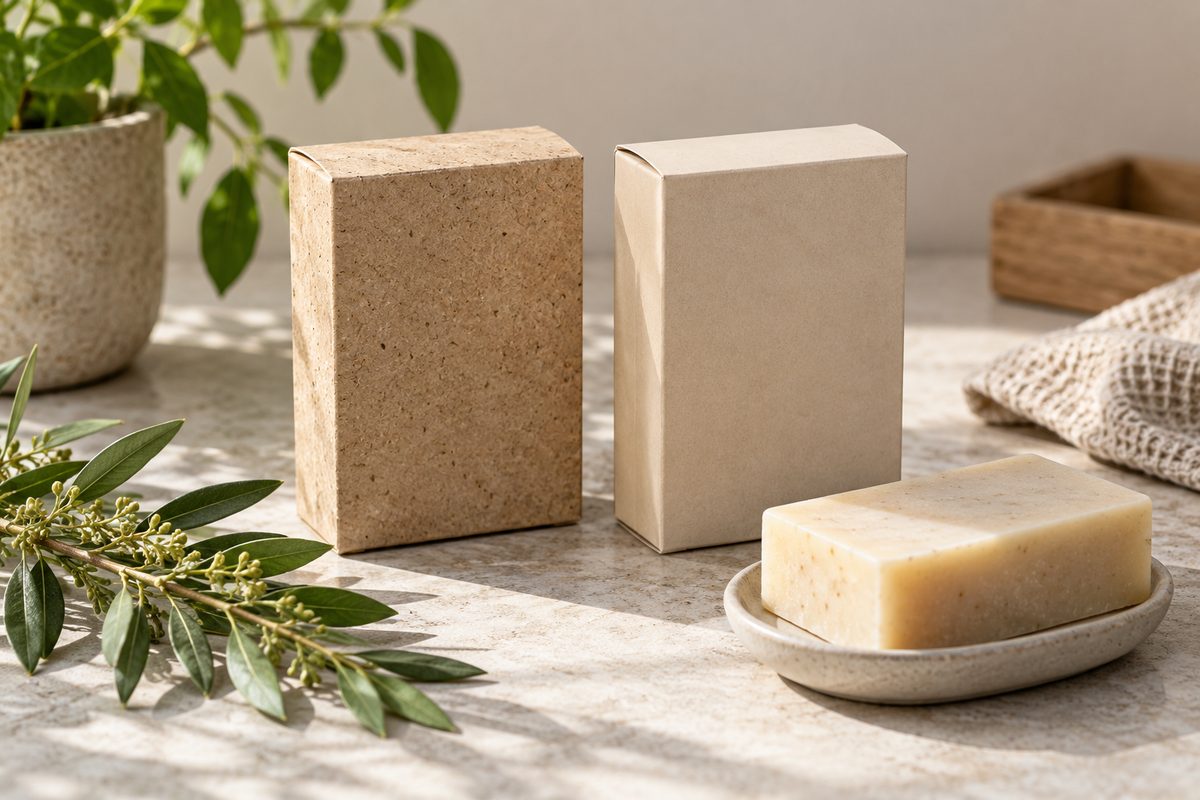
You’re looking for clear advice on how to compare recycled and virgin packaging, and broad environmental claims can make options difficult to compare. A poor fit can cost money and leave you with an item or routine you don’t use. The key is to look at the product’s actual use, packaging, and end-of-life route together. This guide shows you what to compare so you can make a practical change that fits your home.
Check what percentage is recycled
A small recycled-content claim may not change the package’s overall footprint much. Look for the material and the percentage where available. Recycled content also needs a safe, functional package that protects the product and doesn’t create contamination.
Check the local end-of-life route
A package labeled recyclable may not be accepted in your area, and a material can sometimes be recycled only in specific facilities. Confirm the local rule before treating recyclability as the deciding advantage.
Compare size and necessity
A smaller package can reduce material but may raise the number of purchases. A large container can be efficient when the product will be used before it spoils. Avoid choosing a package size that causes waste through spoilage or unused product.
Ask for the simplest sufficient package
Product protection, labeling, hygiene, and transport are real functions. The best option is often the least material that still does the job and can be handled responsibly where you live.
What should this guide help you decide?
The aim of this guide isn’t to hand you a verdict about the packaging decision, but to make the reasoning behind a sound choice visible. The test is whether you can make a more defensible choice about the packaging decision afterward and explain why an alternative might also be reasonable for someone else.
The lesson belongs to the Soapmaking & Sustainability desk, where the central question is the relationship among material use, service life, maintenance, disposal, and the behavior the product makes easier. With the packaging decision, start with the purpose of the decision, then distinguish what is directly observable from what you’re inferring. For the packaging decision, that discipline matters because a single green-sounding word can’t establish a lower environmental impact across the full supply chain.
What standard should you apply?
You have understood the packaging decision when you can name the outcome you want, point to the information that supports the next step, and state what you would do if the evidence or your experience contradicted the expectation. That three-part answer is more reliable than repeating a slogan.
How to reason through the details
A strong analysis of the packaging decision asks what the choice is for, which evidence is genuinely relevant, and whether the resulting recommendation survives ordinary use. The checkpoints for this particular lesson are check what percentage is recycled, check the local end-of-life route, compare size and necessity.
The central concept in the packaging decision is the relationship among material use, service life, maintenance, disposal, and the behavior the product makes easier. For the packaging decision, that framing matters because it prevents a single feature from carrying more meaning than it can bear. You may notice how often the item is replaced, what maintenance it requires, and where its packaging can actually go when considering the packaging decision, but each observation supports a different kind of conclusion. Your analytical task with the packaging decision is to keep those conclusions proportional to the evidence rather than letting a vivid detail dominate the whole judgment.
In the classroom, work with one product, package, or workspace change evaluated across its useful life for the packaging decision. Ask what the comparison is meant to establish before asking which option sounds more appealing.
What the decision looks like in the real world
Imagine that you’re replacing a product you already use and want to compare the practical costs and benefits without buying a second unused system. You don’t need a perfect answer before you begin. You need a sequence that makes the next observation meaningful. Write down what you hope the packaging decision will help you do, then name one detail that would support the choice and one detail that would make you hesitate.
In this scenario, the first mistake would be to confuse certainty of tone with certainty of evidence. A green-sounding claim, a visibly lighter package, or the convenience of the first week can begin a conversation, but the decision becomes teachable only when you explain how that detail relates to the relationship among material use, service life, maintenance, disposal, and the behavior the product makes easier. Notice also the constraints: time, cost, storage, other people, and the possibility that the result will be mixed rather than clearly good or bad.
A useful conclusion about the packaging decision can therefore be provisional. You might decide that the option is worth a limited trial, that more information is needed, or that the safer choice is to pause. Those are all reasoned outcomes. The purpose of this example isn’t to reward decisiveness at any cost, but to make the quality of your reasoning about the packaging decision visible.
Why the distinction matters
A defensible sustainability judgment about the packaging decision requires explicit system boundaries. The environmental profile of a product is shaped by material extraction, manufacturing, transport, use, maintenance, and disposal, so a favorable property at one stage can’t be treated as a complete account of the whole lifecycle. The comparison becomes more rigorous when the alternatives perform the same function and are evaluated over a realistic service life, because a durable product used fully can outperform a nominally greener package that’s quickly replaced. This perspective doesn’t demand impossible precision. It asks for honest accounting of the stages that materially change the decision.
Compare the full package system
Recycled content is only one input, and recyclability is only one possible outcome. Look at quantity, protection, local collection, and actual use before declaring a winner.
For an adjacent question, see Compostable Packaging: What to Check and Responsible Use of Botanicals in Handmade Soap. Browse the Soapmaking & Sustainability desk for the wider cluster.
Source consulted: US EPA: Recycling and reducing waste.
Take 10 minutes to check one bathroom product’s packaging and note how your local program handles it. Which item will you check?
