You keep reapplying balm, yet your dry chapped lips still sting when you step outside or eat. Adding another flavored product can make it harder to see whether your routine is helping or adding irritation. This guide helps you simplify what touches your lips, choose useful protection, and recognize when the problem needs professional attention.
Could your lip products be adding irritation?
Start with what feels uncomfortable. The American Academy of Dermatology’s chapped-lip guidance explains that burning, stinging, and tingling can signal irritation rather than a product working, and recommends stopping products that cause those sensations. You don’t need to push through discomfort to finish an expensive tube or prove that an ingredient advertised as natural should suit your lips.
Look at the exact formula. The Academy lists fragrance, menthol, camphor, and several flavorings among ingredients that can be irritating while lips are chapped, so check the product you actually use rather than assuming every balm from one brand is equivalent. That advice concerns choosing a less irritating routine, and it doesn’t identify which ingredient caused your individual symptoms or diagnose an allergy.
Make the first check small. Put the lip products you currently use on a table, keep each item beside its original ingredient information, and separate those that you’ve noticed sting from products you tolerate without assigning an unconfirmed cause. If you use a prescribed lip treatment, ask the professional who recommended it before changing that part of your care.
What does a simpler balm routine look like?
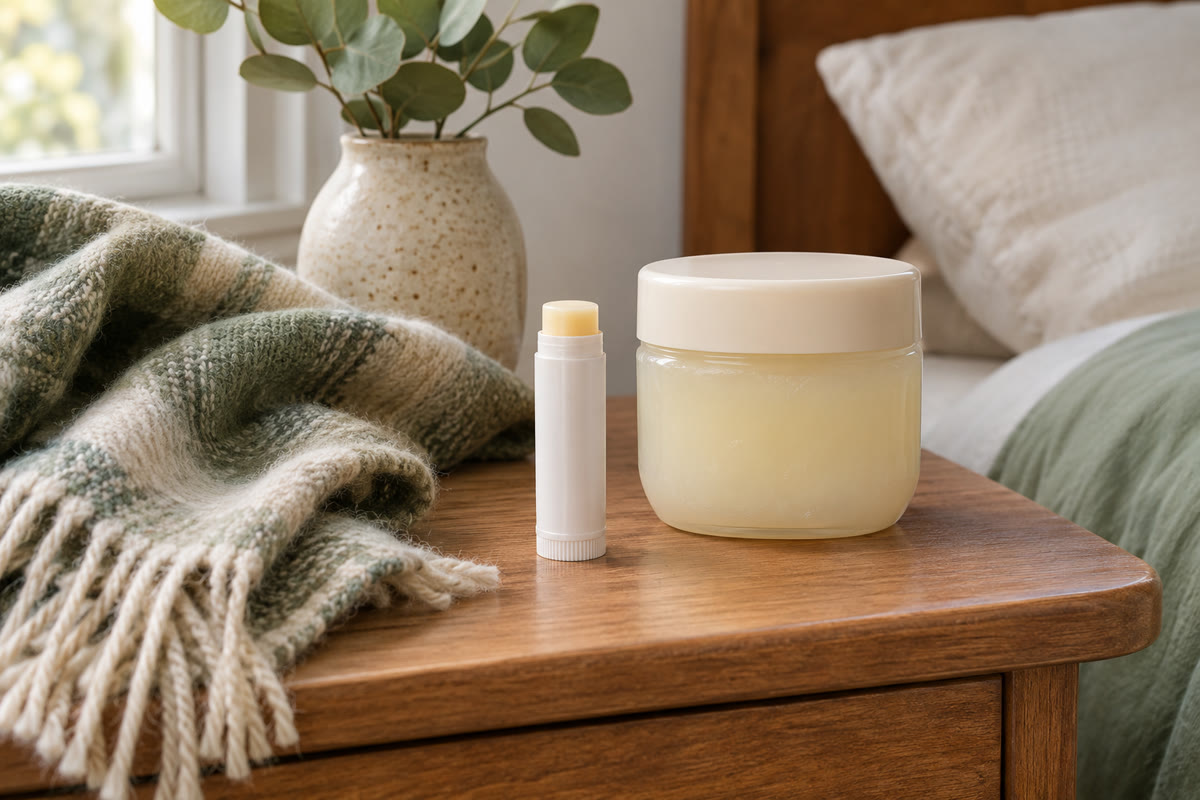
Choose one comfortable product. The Academy recommends a non-irritating balm and describes thick ointments such as plain white petroleum jelly as an option for very dry, cracked lips, rather than suggesting a complicated sequence of scrubs and scented treatments. Follow the product directions, and keep the choice focused on comfort and intended use instead of collecting multiple formulas with overlapping promises.
Keep the product easy to reach. You might put the balm beside your usual evening items or keep it in a bag you use outdoors, provided the location fits its label and doesn’t leave it accessible to someone who could misuse it. A convenient place is a reminder, not evidence that more frequent application will fix every possible cause of persistent chapping.
Avoid making a homemade combination. Mixing balm with essential oils, adding flavorings, or transferring an unknown blend into a new pot changes the product and makes its ingredients harder to track if the discomfort continues. A plain routine is easier to describe to a clinician than a collection of recipes, and it doesn’t require you to work out a safe concentration for a new preparation.
How should you protect your lips outdoors?
Include sun protection in the plan. The Academy recommends a non-irritating lip balm with SPF 30 or higher before going outside and reapplication every two hours outdoors, even during winter when cold weather may dominate your attention. Check the specific product’s directions too, since an ordinary balm without a stated sun-protection function doesn’t become sunscreen because it feels thick or stays on well.
Separate your indoor and outdoor needs. If the product you like at bedtime doesn’t provide labeled sun protection, keep an appropriate outdoor option available rather than assuming one item must handle every situation in your day. You can make that distinction on a small shelf or in a bag without turning a basic lip-care decision into a long list of new purchases.
Read a new label before opening it. Check the intended use, ingredients, and sunscreen directions, especially if a familiar-looking package now describes a different flavor or formula from the one you used previously without discomfort. If your lips react to several products or you have a known ingredient allergy, take that information to a dermatologist or pharmacist instead of guessing which label term guarantees a comfortable result.
Which habits are worth changing?
Notice licking and picking. The Academy advises avoiding licking, biting, and picking because these habits can worsen irritation and interfere with healing, so choose a simple reminder that helps you interrupt the habit without repeatedly checking the skin. You might reach for a comfortable balm when you notice lip licking rather than trying to remove every rough edge with your fingers.
Leave scrubbing out of an irritated routine. If your lips already hurt, there’s no need to turn visible flakes into a project that requires a brush, gritty mixture, or repeated rubbing before you can apply a suitable product. Our guide to what to do when a product stings can help you think about stopping an uncomfortable product without treating the discomfort as a sign of progress.
Keep food and drink observations proportionate. If something consistently makes sore lips uncomfortable, note it for your own planning or a professional conversation, but don’t invent a long dietary restriction list from one difficult meal. A household observation can tell you what felt unpleasant without proving a nutritional deficiency, food allergy, infection, or any other diagnosis that needs an appropriate clinical assessment.
When should you ask a dermatologist?
Don’t let the calendar drag on indefinitely. The Academy recommends seeing a dermatologist if chapped lips don’t improve with appropriate self-care in two to three weeks, because persistent symptoms can have causes beyond ordinary dry weather. Seek help sooner when symptoms are severe or concerning rather than treating that interval as a requirement to wait through worsening pain or a significant reaction.
Bring a short product history. Write down the products you used, when you stopped any that irritated you, and what changed, then bring photographs of the ingredient lists if the original packaging is difficult to carry. Those details give the clinician something concrete to review without requiring you to identify the responsible ingredient or label your condition before the appointment begins.
Keep the rest of your routine manageable. The Academy’s general dry-skin guidance also favors gentle care and stopping products that sting, while our simple gentle-care routine guide offers a way to organize everyday choices without adding several unfamiliar products at once. You can find related questions in the Skin Health & Gentle Care category, but persistent lip symptoms deserve their own assessment rather than another shopping experiment.
Check one balm before tonight
Take five minutes with the tube you use most. Read the ingredients and directions, note whether it has caused burning or stinging, and choose one suitable product to keep accessible while you decide whether professional advice is needed. Which part of your current routine needs attention first: an irritating formula, outdoor protection, or a habit of licking your lips?
