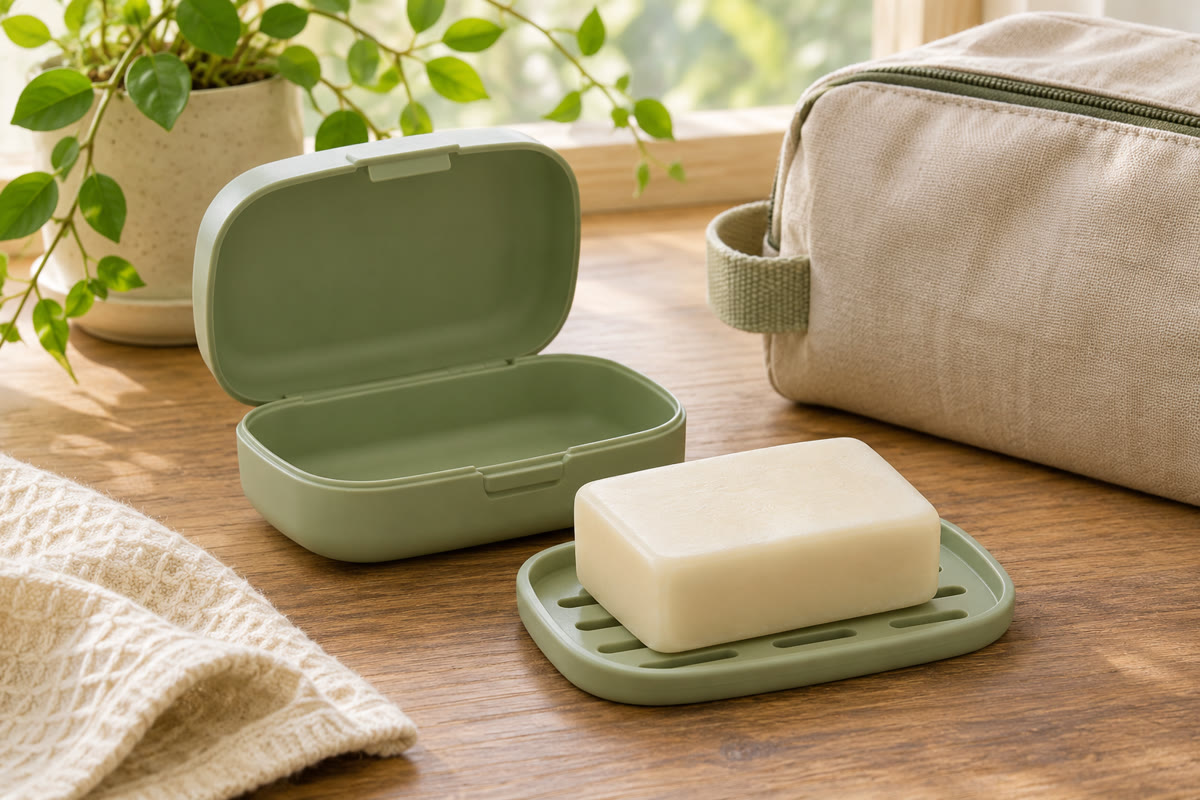
You pack a soap bar for a trip, then arrive with a wet wrapper and a slick toiletry bag. A sealed container can protect your belongings but may keep a damp bar enclosed between uses. This guide helps you choose a travel soap case around drainage, drying, cleaning, and the length of your trip.
What should a travel soap case do?
Start with the actual journey. A short overnight stay, a week of daily showers, and a long drive with a bar between stops place different demands on storage, so consider how often you’ll use the soap and where the case will sit between showers. You may need a container that protects your bag during transit and a place for the bar to air afterward.
Check for drainage and a separate insert. A case with a lift-out tray or other method described by its maker can help keep the bar apart from water collected below, though the product instructions determine how that particular design should be used. A sealed container without a drying plan may work during transport but require you to remove the soap at your destination.
Size it to your bar. Measure the soap you actually intend to bring, allowing room to place it inside without crushing or scraping the edges against a tight lid, and check the case’s capacity before ordering. A travel-sized case doesn’t make a full bar dry faster, and a compact package is useful only if the soap and its holder fit as expected.
How can you prevent a wet mess in your bag?
Let the soap drain before packing when practical. After use, follow the case maker’s instructions and give the bar time to release surface water before closing the container for the return trip, rather than wrapping a dripping bar in paper and placing it straight beside clothing. The time needed depends on the soap, the room, and your schedule, so treat drying as a practical check instead of a fixed number of minutes.
Separate transit from storage. You can carry the bar in its case while traveling, then open or empty the container at your destination if the manufacturer recommends that approach, keeping your toiletries bag protected during movement without leaving the product sealed longer than intended. A small towel can catch drips during packing, but don’t use a damp cloth as long-term storage for a bar or case.
Contain the wet parts. Put a removable drip insert or case in a washable pouch if that helps keep the inside of your bag clean, and follow the pouch and container care instructions after the trip. A second outer bag is only a spill barrier; it doesn’t fix water trapped against a bar or replace cleaning a case that holds residue.
What materials and designs are practical?
Compare care directions with your trip. Silicone, plastic, metal, and wood travel cases can have different cleaning and drying instructions, so check how to care for a product before choosing it based on appearance alone. If you can’t verify the material or the maker’s care details, consider whether an item you already own provides a simpler way to carry the bar without buying a new container.
Think about the conditions. A case that stays in a hot car or a crowded shower caddy may need a different routine from one kept on a dry hotel counter, so don’t assume the same packing plan works everywhere. Keep the product label and the case instructions available when the soap has special storage advice rather than relying on a general tip about all handmade bars.
Avoid permanent changes to the case. Drilling holes, gluing a tray, or adding an absorbent material may affect how the item works and makes cleaning more complicated, so ask the manufacturer before altering a design that is meant to contain personal-care products. A simple case you can open and wash as directed is easier to inspect after a trip than a custom assembly with hidden seams.
How should you clean and dry it?
Follow the maker’s instructions. Rinse or wipe a case only as directed for its material, remove collected soap residue, and dry each piece before storing it between trips if the manufacturer recommends that care. Don’t put an item into a dishwasher or a hot wash merely because another product that looks similar tolerated that method.
Inspect the corners and insert. After cleaning, check the seams, lid, and drainage area for residue or damage before packing your next bar, then replace or repair the case according to the manufacturer’s guidance if a part no longer fits. This quick check helps you notice a practical problem early without claiming that visual inspection is a microbiological safety test.
Keep the soap identified. If you carry more than one bar, leave each product’s wrapper or product information with it so you can remember its name and ingredients, especially when you share a bathroom or have a known product restriction. Our guide to soap storage and product life covers home storage, and that advice can complement the case maker’s directions for travel.
Would another format work better for this trip?
Compare the trip’s actual needs. A bar in a case, a small solid cleanser in its original package, and a liquid product in a compliant travel container each bring different packaging and storage requirements, so choose the option that fits your transport and instructions. You don’t need to buy a reusable case if your existing soap dish or a container you already own safely meets those needs.
Check travel rules before departure. Airline and border rules can change and vary by route, so review the carrier and relevant government guidance for the product format you’re packing instead of relying on a remembered limit from another trip. A case doesn’t change the classification of what is inside, and this article doesn’t establish current baggage rules for every country or carrier.
For the household side of the decision, see our guide to bathroom packaging and the Soapmaking & Sustainability category. Product longevity and reuse depend on how a case works in your routine, so the most useful choice is the one you can maintain and actually bring with you rather than a new item bought for a trip and left unused afterward.
Prepare one bar before you pack
Take five minutes with the soap and case you plan to use. Check the fit, read both sets of care instructions, and decide where the bar will drain at your destination after each shower. What would prevent the most trouble on this trip: a larger case, an easier-to-clean insert, or a place to let the bar dry?
