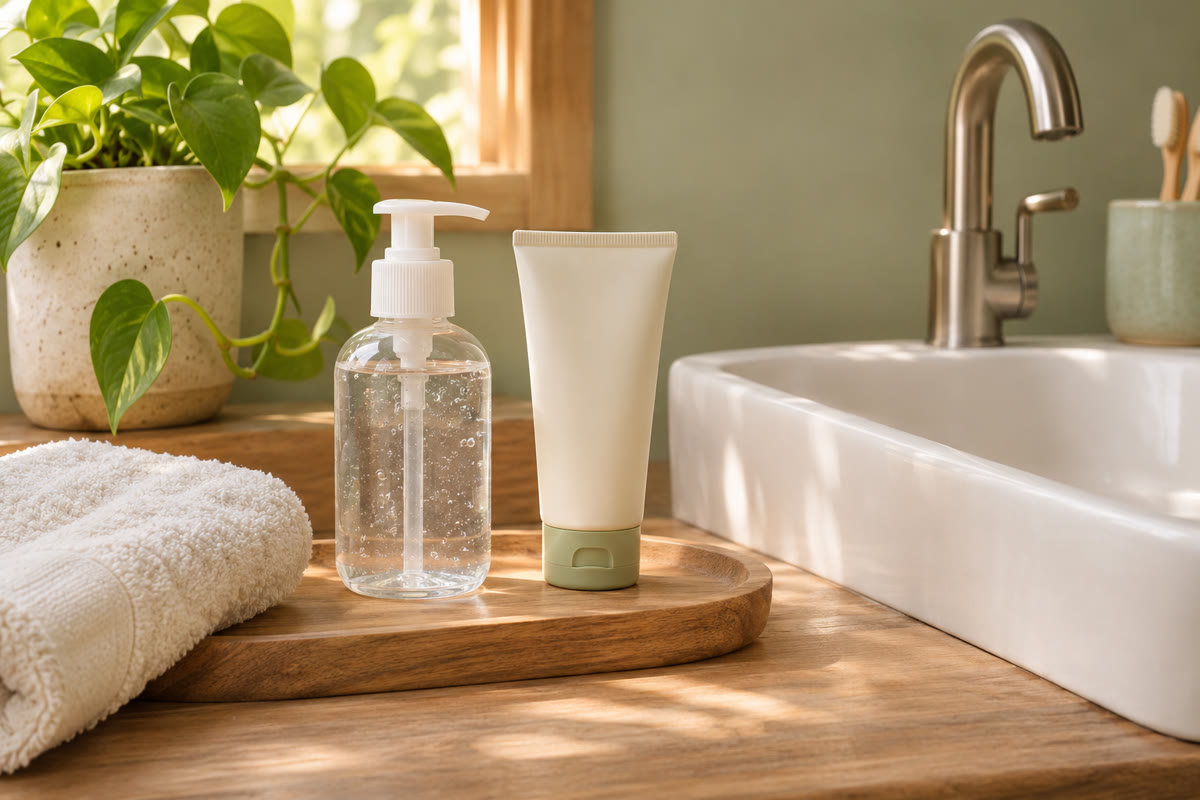
You need clean hands away from home, but hand sanitizer and dry skin seem to be traveling together. Cutting back on needed hygiene can feel tempting when your hands are uncomfortable. This guide helps you use the right hygiene method for the situation and build a simpler care routine around it, rather than choosing between cleanliness and comfort.
When should you wash instead of using sanitizer?
Start with the hygiene task. The Centers for Disease Control and Prevention’s clean-hands guidance recommends soap and water when available and an alcohol-based sanitizer containing at least 60 percent alcohol when washing isn’t possible. Sanitizer isn’t a substitute in every circumstance, including visibly dirty or greasy hands, so identify the situation before deciding which bottle should go in your bag.
Follow the product’s own directions. Apply the amount specified and rub it across your hands until they’re dry, rather than wiping the product off early or combining it with a cream in your palm to change how it feels. Keeping sanitizer and moisturizer as separate products lets you follow their intended uses without inventing a mixture whose hygiene performance hasn’t been established.
Choose a practical carrying setup. You might keep a labeled sanitizer and a small moisturizer in different pockets of the same pouch, so that the items are easy to find without confusing one for the other. Don’t transfer them into matching unmarked bottles, especially if someone else uses your bag or a child could mistake one container for another household product.
What can help your hands feel more comfortable?
Give moisturizing its own place. The American Academy of Dermatology’s hand-care advice recommends moisturizing after washing or sanitizing and suggests fragrance-free creams or ointments, which can make more sense than asking the hygiene product to do every job. Wait until sanitizer has dried and use the moisturizer according to its directions rather than diluting the sanitizer or making a combined homemade formula.
Use something you already tolerate if possible. A familiar fragrance-free cream in an accessible place can be a reasonable starting point before you buy another wash, a new exfoliant, and a collection of scented balms to solve the same problem. If you need to choose a product, note your known ingredient restrictions and ask a pharmacist or dermatologist about options when several previous products have caused discomfort.
Keep the reminder attached to a real moment. Put the moisturizer where you actually finish hand hygiene, such as your desk drawer, bag pouch, or a suitable spot near a sink, rather than storing it in a cupboard you rarely open during the day. That arrangement is an organization aid, so choose the location around your routine and the product’s storage directions rather than an idealized bathroom display.
Which adjustments should you avoid making yourself?
Don’t add oils to sanitizer. Mixing in fragrance, essential oil, water, or lotion changes the original formulation, and a more comfortable texture doesn’t demonstrate that the altered product still works as labeled for hygiene. If the supplied formula doesn’t suit you, keep the label information and ask about a suitable alternative instead of modifying a product that has a specific intended alcohol concentration and use.
Don’t replace needed washing with moisturizer. A cream can have a place in skin care, but applying it isn’t the same action as cleaning hands, and it doesn’t answer the CDC’s guidance about situations requiring soap and water. You can plan the steps together while keeping their purposes clear, particularly before preparing food or when your hands are visibly dirty.
Keep workplace rules in view. If your job has a specific hand-hygiene protocol, ask the person responsible for infection prevention or occupational health about compatible products before making a substitution because a general article describes a different household arrangement. The same applies to a clinician’s instructions for an individual situation, which may involve requirements that your usual shopping comparison doesn’t address.
How can you handle a day with repeated hand cleaning?
Look at where care breaks down. You might discover that the hand cream stays at home, the work sink has no convenient drying option, or the product you dislike is the only one you can easily reach between tasks. Write down that specific obstacle before buying another bottle, because the next useful change may be access, a refill, or a conversation about an allowed alternative.
Make one change you can explain. For a hypothetical commute, you could carry a moisturizer you already use alongside your labeled sanitizer and note whether you remember the care step after the sanitizer dries, without calling that observation a clinical test. If you later need professional advice, a clear account of your routine is more useful than a collection of products you changed on the same day.
Consider other exposures too. A day that includes washing dishes, cleaning with detergents, or working outdoors may involve more than sanitizer, so include those activities when you describe your hands’ discomfort to a clinician or pharmacist. Don’t assume that the most recently purchased bottle explains every symptom, and don’t deliberately repeat an exposure that seems to cause a significant reaction just to prove the connection.
When does dry skin need assessment?
Keep persistent symptoms separate from a shopping problem. If you have ongoing cracks, a painful rash, bleeding, or symptoms that aren’t settling with a suitable routine, seek advice rather than continuing to cycle through fragranced products or reducing necessary hand hygiene. The Academy’s hand-care guidance explains why dry, damaged hands deserve attention, and a clinician can assess causes that you can’t identify from a product label.
Take the actual labels with you. A photograph of the sanitizer ingredients, the moisturizer name, and a brief description of your hygiene frequency can help a professional understand the pattern without requiring you to estimate every exposure perfectly. Our guide to responding when a product stings offers a stopping point for an uncomfortable product, while your individual treatment questions still belong with qualified care.
Keep the routine small enough to repeat. Our simple gentle-care routine guide and the Skin Health & Gentle Care category can help you organize further questions about everyday care, but you don’t need to add a separate product for every place you wash. A clear hygiene method and a suitable accessible moisturizer are easier to account for than a changing collection of overlapping remedies.
Set up one bag pocket today
Use the next five minutes to check your supplies. Read your sanitizer’s label, keep it in its original identified container, and place a moisturizer you tolerate nearby so you can use each product as directed when you’re away from home. Which part of that setup is missing from your day: the right hygiene option, a suitable cream, or a place to keep both?
