Personal care feels rushed when it’s squeezed between too many other demands; a calmer version often comes from removing friction, scheduling a realistic a

Personal care feels rushed when it’s squeezed between too many other demands; a calmer version often comes from removing friction, scheduling a realistic a

Self-care is not a replacement for assessment and treatment when physical or mental health symptoms significantly affect daily life; professional support i

A boundary around rest is a way of making recovery possible when other demands compete for the same time. It can be a physical change, a short period with

Fresh air and time outdoors can support a change of pace, connection with the environment, and the sensory difference of leaving a room; they are not a uni

When time is scarce, self-care has to fit inside the life that is happening rather than waiting for a clear afternoon; small acts of care can be useful, bu

Stress can show up in the body before you have a clear explanation for it; learning a few personal signals can create an earlier opportunity to pause, adju

A home ritual can help separate work from the rest of the evening, especially when the same room serves both roles; the ritual should be short enough to re
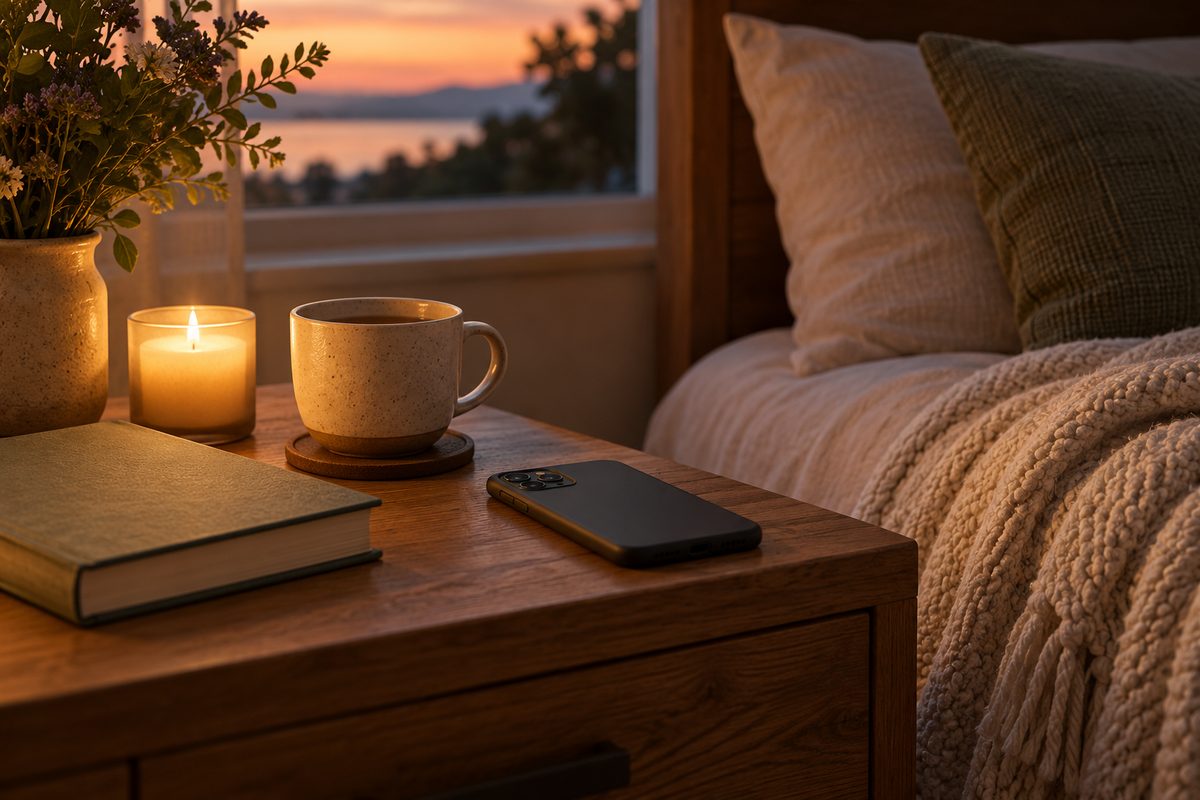
Digital wind-down time is a boundary you design, not a strict test of willpower; the useful change is usually a small transition away from scrolling, email

A self-care basket can make a pause easier to begin by gathering a few useful items where you can see them; it works best when it contains familiar, consum
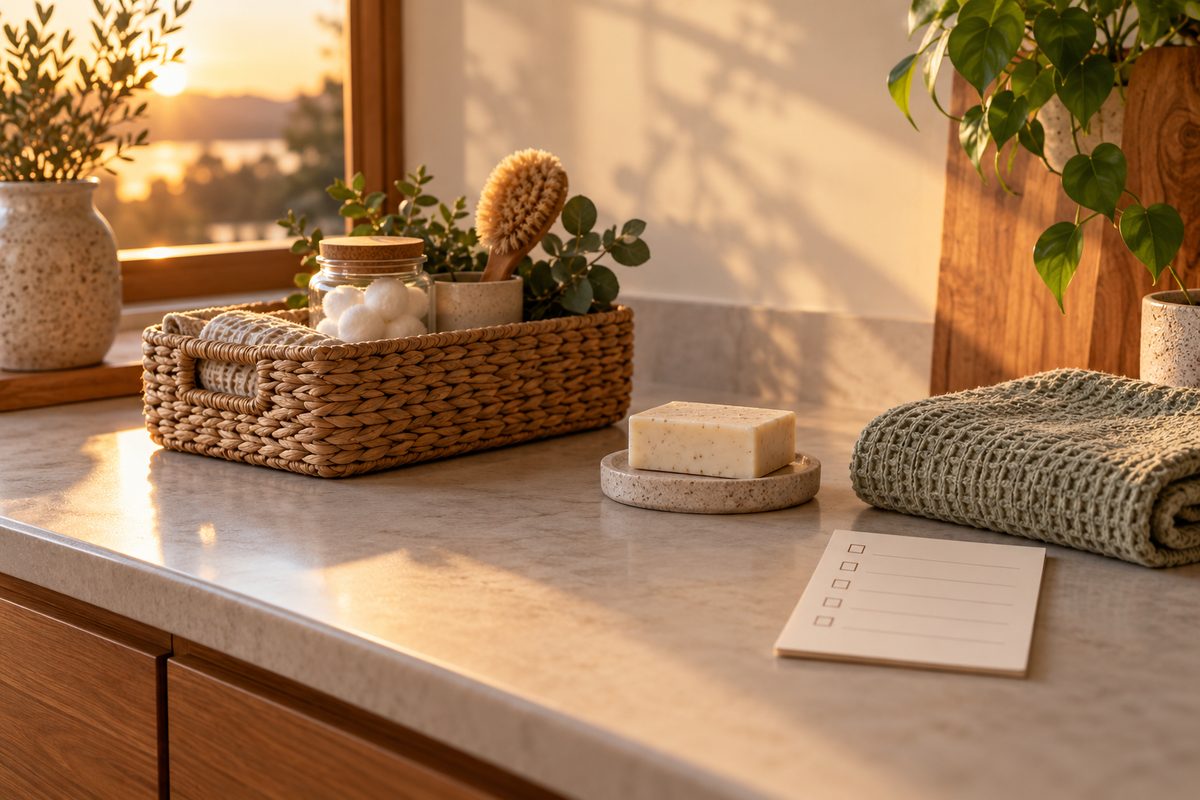
Decision fatigue can build when ordinary choices are always presented together; reducing the number of decisions, setting defaults, and postponing low-stak