You see glycerin in soap and want to know whether it will solve the tight feeling you notice after washing. A single ingredient can sound like a complete answer when the rest of the formula stays out of view. This guide helps you separate an ingredient’s role from a finished product’s performance and choose a more useful comparison.
What does glycerin actually tell you?
Glycerin is one part of a formula. The American Academy of Dermatology’s hand-care guidance identifies it as a humectant, an ingredient used to attract water, and includes it among ingredients to consider in hand moisturizers. That role gives you a reason to recognize the name, but it doesn’t establish how every soap containing glycerin will feel on your skin.
Keep the product category in view. A rinse-off cleanser and a leave-on cream have different instructions and jobs, so evidence or advice about a moisturizing cream shouldn’t be treated as a performance test of a particular soap bar. If the claim you’re reading concerns a lotion, ask what information actually supports applying that claim to the wash in your basket.
You don’t need a chemistry project. Write down the product name, its intended use, the complete ingredient list when available, and the specific result you’re hoping for before comparing one glycerin-containing option with another. That small record lets you ask a seller a concrete question instead of trying to decide from the size of the word on the wrapper.
Can a transparent bar prove that a soap is gentle?
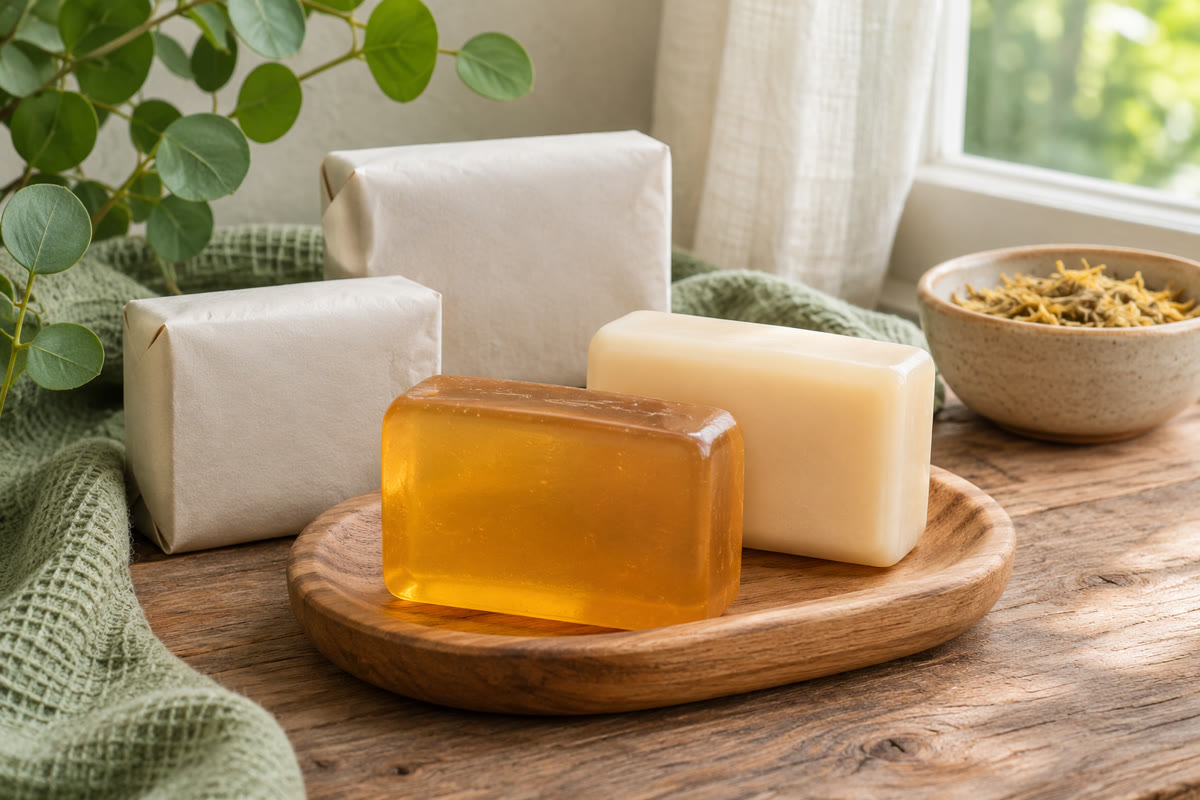
Appearance can’t finish the comparison. A clear amber bar may look different from an opaque ivory bar, but this guide has no product-specific evidence that lets you rank those bars for irritation or moisturizing performance from a photograph. Treat transparency, shape, and color as visible features while leaving health and comfort claims to information about the actual finished products.
The same caution applies to a short label. If one wrapper emphasizes glycerin and another emphasizes olive oil, neither headline gives you the full instructions, fragrance information, or other details needed for a fair comparison between the two products. Our guide to reading an organic soap ingredient list offers a broader way to work through the package before choosing.
Ask a narrow question. You might request the complete ingredient information, ask whether the bar contains fragrance, or ask what finished-product testing supports a specific claim printed on the wrapper rather than asking which ingredient is best for everyone. A seller who can answer those questions gives you more usable information than a slogan about a single highlighted component.
How does the whole product change the decision?
Start with what the wash is for. The Food and Drug Administration’s soap guidance explains that the regulatory category depends on a product’s composition and intended use, including whether it is marketed only for cleansing or with cosmetic or drug claims. A moisturizing promise and a disease-treatment promise therefore raise different questions, even when both appear on something casually called soap.
Be cautious about treatment language. If a bar claims to treat eczema or another disease, don’t assume the presence of glycerin establishes that claim or makes the product interchangeable with care recommended by your clinician. Keep your product-choice question separate from a medical-treatment question, and take the exact label with you when you need help deciding whether it fits your care plan.
A comparison sheet can stay very short. Give each candidate a row for fragrance, stated use, directions, package size, and your unanswered questions, then leave blank any box the seller hasn’t supplied enough information to complete. An honest blank is more useful than guessing a glycerin percentage from ingredient order or inventing a performance score that nobody has measured.
What should you do after washing?
Look beyond the soap dish. The Academy’s hand-care advice recommends moisturizing after washing and suggests fragrance-free creams or ointments, so a useful routine can include a suitable leave-on product rather than asking the cleanser to do every job. Keep any moisturizer you already tolerate near the place where you dry your hands if that arrangement helps you remember it.
You can change the setup before buying. For example, put the current wash and your usual moisturizer together, then note whether you consistently follow their instructions before deciding that a new bar is the missing piece. This isn’t a clinical experiment or proof of a cause, but it can reveal that the routine you intended and the routine you actually follow aren’t identical.
Don’t use discomfort as a progress signal. If a new product burns, stings, or leaves an ongoing rash, stop the trial and seek appropriate advice instead of increasing the amount because you expect a featured ingredient to help eventually. Our fragrance-free soap shopping guide can help with ingredient questions, but a label comparison can’t diagnose the reason for a skin reaction.
How can you test a purchase decision without overbuying?
Keep the first purchase modest. If you decide to try a different product, choose a quantity you’re comfortable evaluating and keep its packaging so that the full ingredient information remains available if you later have a question. A larger discount bundle can wait until you know whether the item actually belongs in your household routine and suits the people using it.
Leave unrelated changes for another time. Switching the wash, moisturizer, laundry product, and shaving routine together can leave you without a clear account of what changed when you try to explain a reaction to a clinician. You don’t have to infer causation yourself, but a straightforward dated list is easier to share than a recollection of several purchases made at once.
Make room for individual limits. Someone else’s praise for a glycerin bar doesn’t establish that it will suit you, and a product that feels comfortable doesn’t need to become a universal recommendation for every type of skin. For related label questions, the Organic Soap & Ingredients category keeps the focus on practical decisions and the information available for the product in front of you.
Read one complete label today
Choose the wash you already own. Spend the next few minutes finding its full ingredient information and identifying one question the highlighted glycerin claim doesn’t answer, such as whether the product contains fragrance or is intended for your planned use. Which missing detail would help you compare your next soap purchase more confidently?
