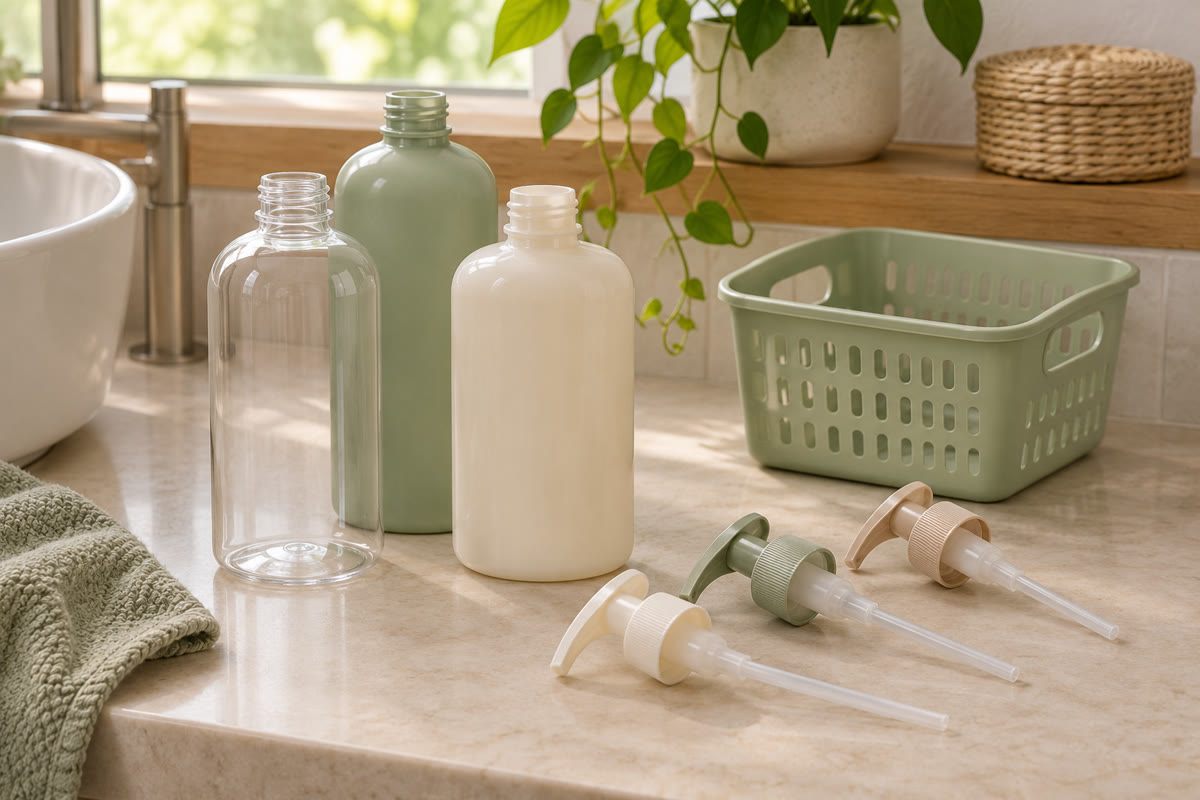
You finish a bottle of shampoo and wonder whether the package can go in bathroom recycling. A recycling symbol can look like a universal instruction even when local collection programs differ. This guide helps you separate the bottle from its pump, check local rules, and avoid putting uncertain items in a bin where they can cause problems.
What can you learn from the container?
Look for the material and parts. An empty shampoo bottle, its cap, and a spring-loaded pump may be made from different materials, so treat the whole dispenser as several pieces rather than assuming one recycling symbol covers everything attached. Rinse or empty the container as your local instructions require, and keep the parts together until you check the accepted list.
A resin code isn’t a local acceptance label. The Environmental Protection Agency’s recycling guidance explains that the code identifies a type of plastic but doesn’t guarantee your local program accepts it. A familiar number inside a triangle therefore gives you a clue about material, not permission to put every matching object in your curbside cart.
Don’t make decisions by size alone. A small soap bottle and a large detergent bottle may follow different local collection instructions even if both are plastic, while the pump mechanism can create its own sorting issue. Write down the exact package type you’re checking so you can search your municipality’s guidance or contact the program with a specific question.
Should the pump and cap stay attached?
Follow the local program’s directions. Some communities accept a bottle with its cap attached, while others ask residents to remove pump tops or dispose of them separately, so a generic tip from another city can send you in the wrong direction. The EPA recommends checking with your local recycling provider when you need to know what is accepted in your area.
Separate parts only as instructed. If your provider asks for the pump to be removed, set it aside for the disposal route they specify rather than tossing the entire bottle because the pump is inconvenient. If the instructions say to leave the cap on, follow that direction instead of applying a social-media tip that says every closure needs to be removed.
Keep a local reference near the sorting spot. You might save your waste provider’s bathroom-packaging page or put a short note inside a cabinet so household members can check before the collection day. A location-specific note is more useful than memorizing a national list for a service that may accept different containers from the one where you live.
What should happen to a questionable container?
Pause before wishcycling. The EPA explains that items not accepted by a program can contaminate a recycling load and may need to be sorted out, so placing a questionable object in the bin can create extra work without establishing that it will be recycled. If the instructions don’t address a mixed-material dispenser, check with your waste provider before choosing a destination.
Use take-back options when available. The EPA notes that some items may be accepted at retail locations or recycling centers, so you can look for a local collection route if curbside recycling doesn’t take the item. Confirm the materials and condition they accept before traveling, because a store collection bin may serve a specific product type rather than every pump, tube, and sample packet.
Empty products safely. Follow the product label and local waste guidance for leftovers, especially when the contents are a cleaner or other product with a hazardous-waste instruction. This article doesn’t determine the right disposal method for every leftover liquid, and a mostly empty bottle isn’t a reason to pour an unknown product into a sink or storm drain.
How can you reduce packaging without buying more?
Use what you already have first. The EPA’s waste-reduction guidance puts reducing and reusing ahead of disposal as practical ways to conserve resources, which supports using a product you own before replacing its container with a different system. If a bottle is still functional, a packaging audit doesn’t require buying a new storage set in the name of waste reduction.
Consider a refill only when it fits. Compare the refill’s material, amount, transport, store availability, and the container you already own, then make sure the seller explains how to refill and clean it. A refill format isn’t automatically simpler for every household if it requires extra travel, adds a product you don’t need, or doesn’t fit the existing dispenser.
Keep the comparison small. Choose one product you already finish regularly, check whether a replacement or refill is locally available, and note the instructions before switching a whole bathroom cabinet at once. You can review whether the new setup is practical after using it without claiming a precise environmental saving that the available product information doesn’t establish.
How can a household keep sorting consistent?
Make categories visible. Use a small container for empty packages you’re checking, then sort them once you have the local instructions rather than leaving a confusing mix beside the sink. Keep the final bins clear of products that still contain contents, and tell anyone who shares the bathroom what the local list says about the packages you commonly use.
Update the note when collection rules change. A service may revise accepted materials or collection routes, so date the saved page or check it again before assuming a rule from a previous home still applies. When your provider offers no clear answer, ask the municipal waste office where a particular package should go instead of declaring every similar item non-recyclable.
For more packaging choices, see our guide to reducing bathroom packaging waste and ways to avoid greenwashing in personal care. The Soapmaking & Sustainability category also covers refills and product longevity, but the best immediate step is finding the local rule for a package you already own rather than purchasing a symbolic recycling accessory.
Check one bottle before collection day
Take five minutes with an empty package. Read its material marking, separate the cap and pump if your provider asks, and save the local instructions where the next person can find them. Which part of your bathroom packaging is hardest to sort: a pump, a soft tube, or an item with no clear material information?
