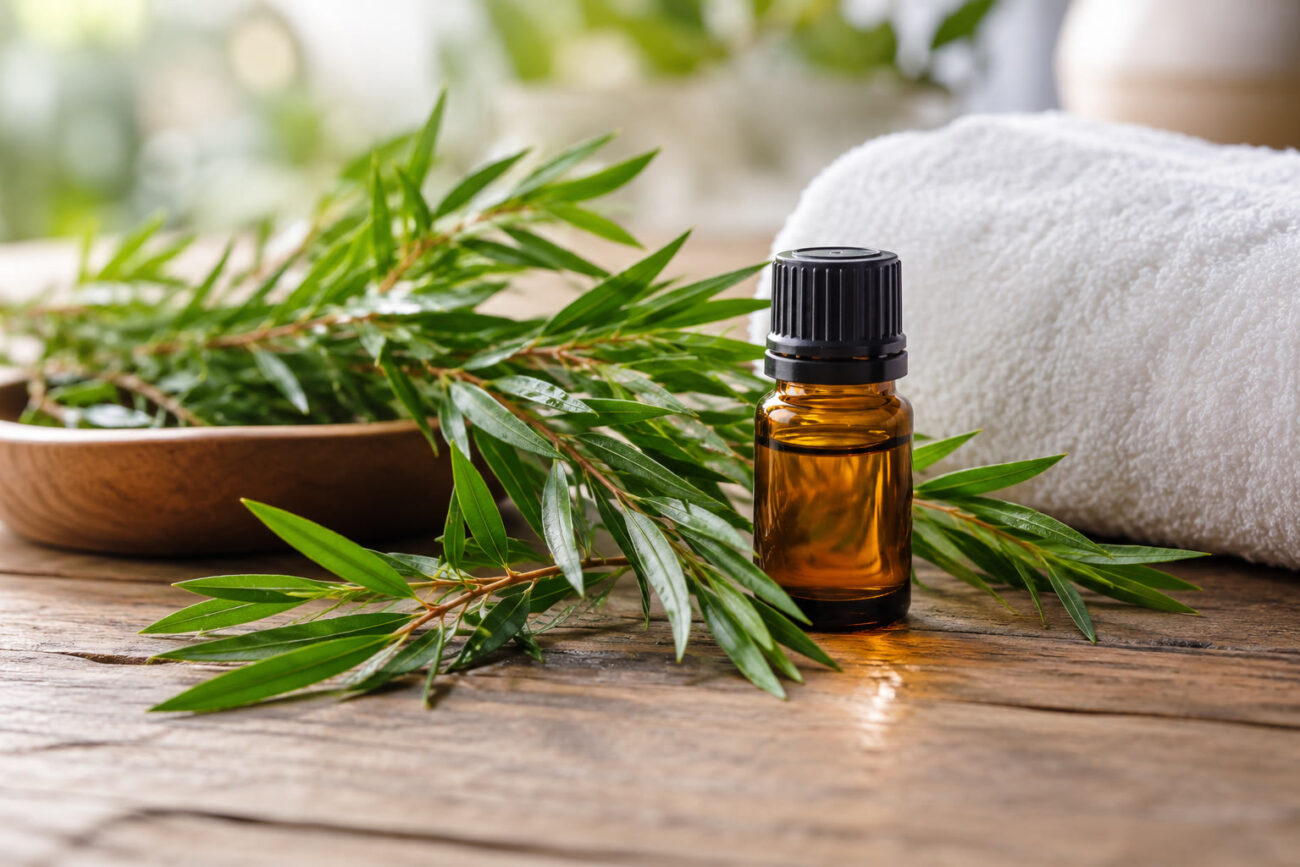
Tea tree oil is often presented as a versatile remedy, but its name does not make it safe for every use. It can irritate skin, is dangerous if swallowed, and should never be treated as a substitute for medical care when an infection is suspected.
The label may be more limited than the folklore
Tea tree oil is a concentrated aromatic material with a characteristic medicinal smell. Some products are intended for diluted topical use, while others should remain in a bottle and away from skin. Read the actual directions rather than borrowing advice from a different oil.
Skin concerns need a cautious approach
A red, painful, or spreading skin problem can have many causes. Applying an essential oil may delay appropriate care and obscure what is happening. Do not put tea tree oil on wounds, broken skin, or sensitive areas without professional guidance specific to that situation.
Internal use is not an ordinary remedy
Swallowing essential oils can cause serious harm. Keep bottles tightly closed, store them out of reach of children and pets, and never add tea tree oil to drinking water or food. If ingestion occurs, contact local poison-control services immediately.
Useful claims require precise evidence
Tea tree is often described using broad words such as antibacterial or antifungal, but those labels do not mean every finished product is an effective treatment. Concentration, formulation, contact time, and intended use matter, and a pleasant botanical option still needs a cautious trial.
Respect the bottle’s limits
Tea tree oil can be avoided easily when its risk does not match the need. Keep it away from ingestion and broken skin, follow the label, and ask for proper care when a symptom is persistent or severe.
For more practical context, explore Peppermint Oil and Skin: Important Precautions and Essential Oil Allergies: Signs to Watch For. Browse the Essential Oils & Aromatherapy desk for the wider cluster.
Reference: National Center for Complementary and Integrative Health: Aromatherapy.
General educational information only. This article does not replace advice from a qualified health professional.
