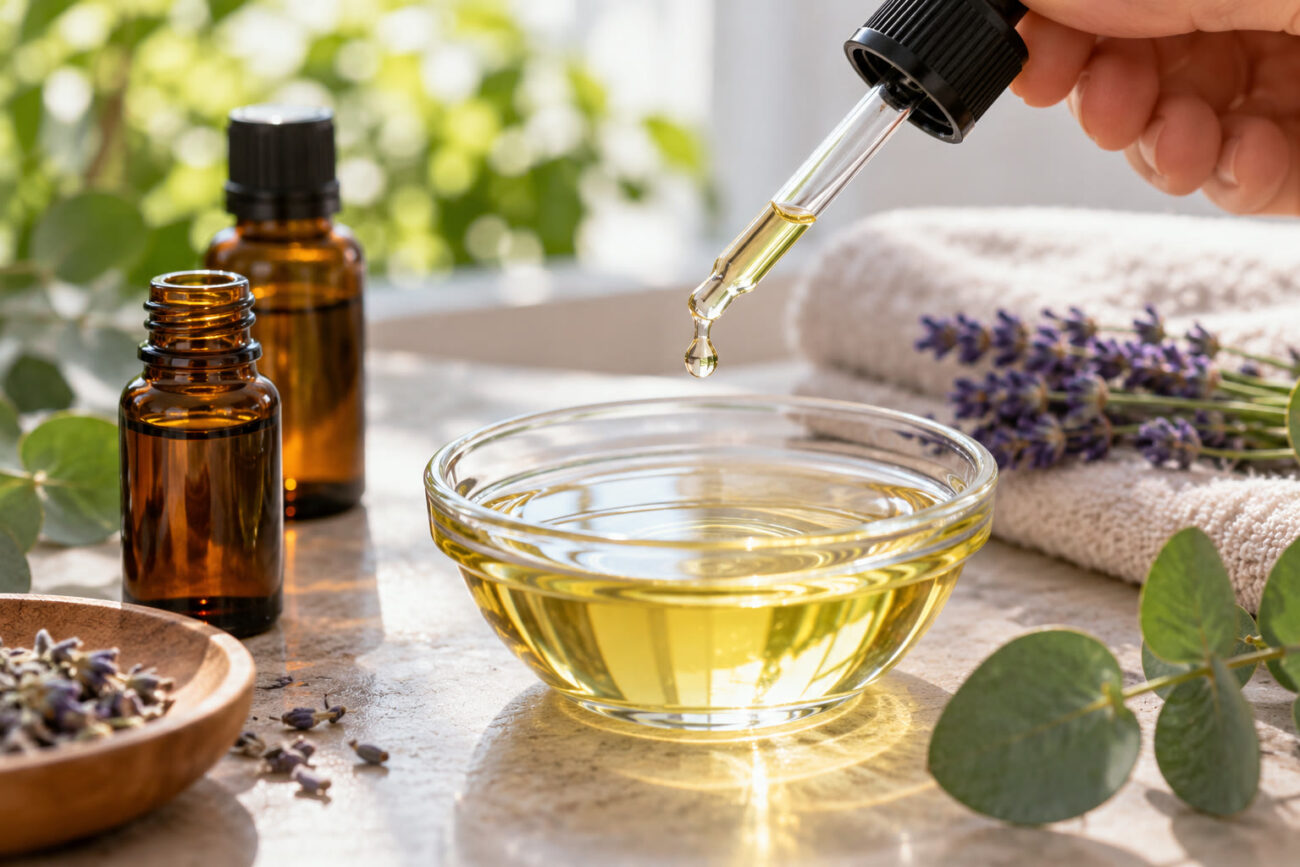
Diluting an essential oil means combining a measured amount with a suitable carrier before skin contact. The important part is not a fashionable ratio alone; it is following product-specific instructions, preparing only what you need, and keeping the mixture clearly labeled.
Start with the product directions
Different oils and finished products have different recommended uses and limits. A dilution mentioned for an adult massage oil should not be assumed safe for a child, a larger skin area, or a damaged skin barrier. Do not increase the amount because the scent is faint.
Use an appropriate carrier
A carrier can be a plant oil or another product designed to disperse essential oil safely. It should be compatible with the essential oil and acceptable for your skin. Keep the bottle clean, measure deliberately, and avoid dipping contaminated fingers back into a shared container.
Write down what the mixture contains
A small label with the date, oils, carrier, and intended use prevents confusion later. Mixtures do not become risk-free simply because they are homemade. Store them away from heat and light, and discard anything that smells rancid or contaminated.
Treat irritation as a stop signal
If burning, redness, swelling, or another unusual response occurs, stop using the mixture and wash the area with mild soap and water. Persistent or severe symptoms need qualified medical advice. Seek urgent help for breathing difficulty, facial swelling, or other signs of a serious reaction.
Measure, label, and keep the exposure modest
Good dilution is thoughtful preparation rather than a stronger version of an essential oil. Use the product’s directions, a sensible carrier, and a clear record of what you made.
Two useful follow-up reads are Essential Oil Claims: How to Separate Hype from Evidence and Lavender Oil: What People Use It For. Browse the Essential Oils & Aromatherapy desk for the wider cluster.
Reference: National Center for Complementary and Integrative Health: Aromatherapy.
General educational information only. This article does not replace advice from a qualified health professional.
